


seedandplant
Moringa Seeds
Moringa Seeds
Couldn't load pickup availability
🌱 Moringa Seeds – Grow Your Own Drumstick Tree
Grow Moringa (Drumstick) plants at home with quality Moringa seeds from SeedAndPlant. Moringa is a fast-growing, warm-season tree that can be grown in gardens, large containers and suitable terrace-garden spaces.
The plant is valued for its edible leaves and young pods, which are commonly used in Indian cooking.
🌿 Moringa / Drumstick Names
Moringa is known by different names across India:
- English: Moringa, Drumstick Tree
- Hindi: Sahjan / Sahijan
- Marathi: Shevga
- Tamil: Murungai
- Telugu: Munaga
- Bengali: Sajna
- Gujarati: Suragavo
- Malayalam: Muringa
- Sanskrit: Subhanjana / Sigru
📦 Moringa Seeds Pack Contains
Seed Quantity: 10 Seeds
Suitable for:
- Home gardens
- Terrace gardens
- Large pots and containers
- Kitchen gardens
- Backyard gardens
🌱 When to Sow Moringa Seeds in India?
Moringa prefers warm weather and grows best when temperatures are suitable for warm-season plants.
In most parts of India, sow the seeds during the warmer months. Avoid sowing during periods of very cold weather.
For container growing, choose a warm, sunny location protected from strong winds.
🌱 How to Grow Moringa from Seeds
1. Prepare the Soil
Use loose, well-draining soil.
A mixture containing garden soil, compost and a drainage-supporting material such as sand or cocopeat can be suitable for container growing.
Avoid areas where water remains stagnant.
2. Sow the Seeds
- Make a hole approximately 2–3 cm deep.
- Place one Moringa seed in the hole.
- Cover lightly with soil.
- Water gently after sowing.
Do not compact the soil heavily over the seed.
3. Watering
Keep the soil lightly moist during germination.
Avoid excessive watering or waterlogging.
Once the plant is established, allow the soil to dry slightly between watering.
4. Germination
Moringa seeds can generally germinate in around 7–14 days under suitable warm conditions.
Actual germination time can vary depending on temperature, moisture, seed quality and growing conditions.
☀️ Sunlight Requirements
Moringa is a sun-loving plant.
After germination, place the plant in a location receiving plenty of direct sunlight.
A sunny outdoor location is generally suitable for healthy plant growth.
🪴 Growing Moringa in Pots
Moringa can be grown in a large container when adequate space is provided.
For container gardening:
- Use a large pot with drainage holes.
- Use well-draining soil.
- Place the pot in a sunny location.
- Water according to the soil's moisture level.
- Prune the plant when necessary to manage its size.
A larger container gives the roots more room to develop.
🌱 Transplanting Moringa Seedlings
If starting seeds in a nursery tray or small container, transplant the seedlings once they are sufficiently established.
When transplanting:
- Prepare the new planting location.
- Carefully remove the seedling while protecting the roots.
- Place it at approximately the same depth as before.
- Fill the surrounding area with soil.
- Water gently.
Avoid disturbing the roots unnecessarily during transplantation.
🌿 Soil for Moringa
Moringa prefers well-draining soil.
A sandy-loam type growing medium can work well because it allows excess water to drain away while retaining enough moisture for plant growth.
For containers, always ensure adequate drainage holes.
💧 Watering Moringa Plants
Moringa is relatively tolerant once established.
Young plants
Water when the soil begins to dry, keeping the growing medium moderately moist without making it waterlogged.
Established plants
Water deeply when required and allow the soil to dry somewhat between watering.
Watering requirements will vary with temperature, rainfall, soil type and container size.
✂️ Pruning & Plant Care
Regular pruning can help maintain a manageable plant size and encourage branching.
You can:
- Remove damaged or dead branches.
- Trim excessive vertical growth.
- Encourage branching by pruning suitable growing tips.
- Keep the area around the plant free from excessive weeds.
- Monitor the plant regularly for common garden pests.
🥘 Culinary Uses of Moringa
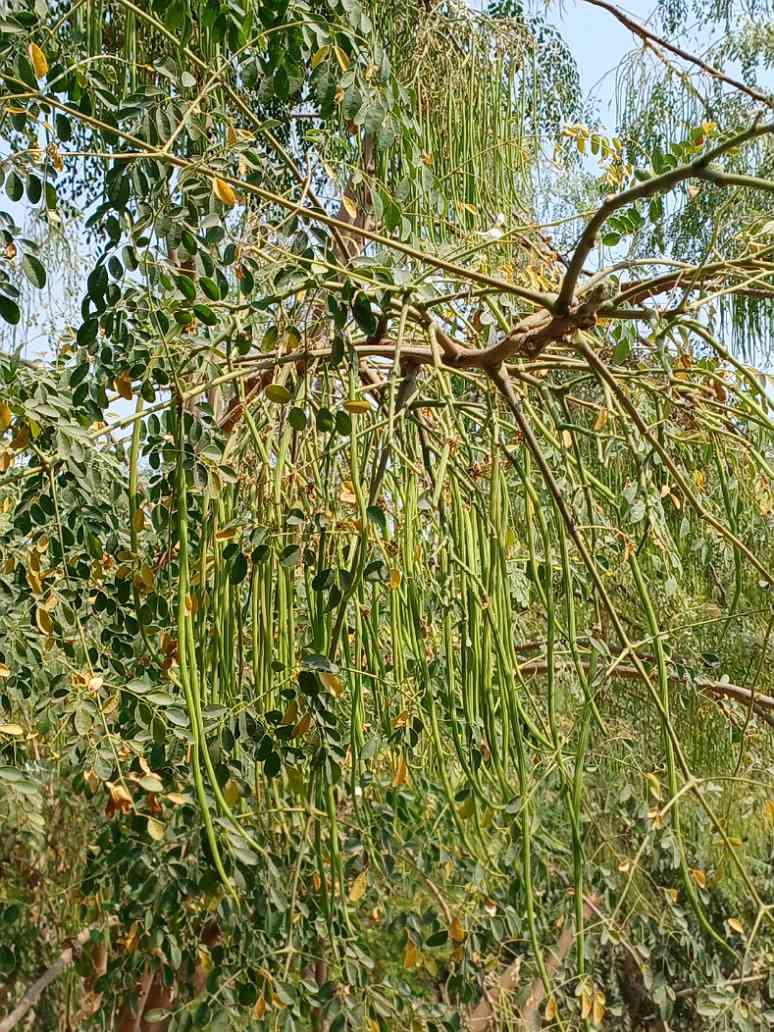
Moringa is commonly grown for its leaves and young pods.
The leaves can be used in:
- Dal
- Curries
- Soups
- Stir-fries
- Vegetable dishes
Young Moringa pods, commonly known as drumsticks, are widely used in Indian cooking, including curries and sambar.
Fresh leaves can be harvested as needed once the plant has developed sufficient growth.
🌿 Harvesting Moringa
Harvesting time depends on growing conditions, variety and how the plant is managed.
For leafy growth, harvest suitable young leaves and growing tips once the plant is established.
Young pods can be harvested when they reach an appropriate size and before they become overly mature and fibrous.
Regular pruning and harvesting can also help maintain the plant at a manageable size.
⭐ Why Grow Moringa at Home?
- Fast-growing warm-season tree
- Suitable for Indian growing conditions
- Can be grown in suitable large containers
- Excellent choice for home gardens
- Suitable for terrace gardens with adequate space
- Edible leaves
- Young pods can be used in cooking
- Easy addition to a kitchen garden
📋 Product Details
| Feature | Details |
|---|---|
| Product | Moringa Seeds |
| Common Name | Drumstick Seeds |
| Seed Quantity | 10 Seeds |
| Plant Type | Tree |
| Suitable For | Garden & Large Containers |
| Growing Season | Warm Season |
| Country of Origin | India |
Important Note
Germination and plant growth depend on temperature, soil, moisture, sunlight, seed quality and other growing conditions. Actual results may vary.
Share

GENERAL INFORMATIONS
Common Questions
Country of origin ?
India
What is the Shipping Cost ?
Your products are shipped based on option selected at the time of Checkout.
1. India Post Shipping = ₹49/-
2. Private Courier Shipping =₹69/-